Installing an EV Charger in Your Garage? Check Your Door and Opener First
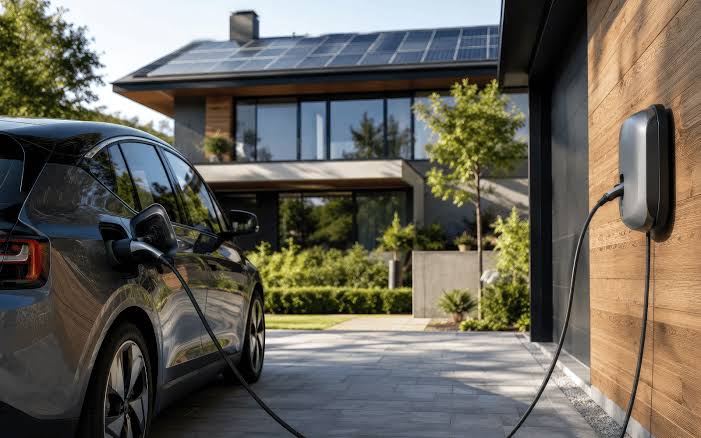
The easiest and most convenient way to charge at home is to install an electric vehicle (EV) charging station. But, before you bring in an electrician, give your garage door and opener a second look. When designing your new charging unit, cables, and parking layout can influence how safely you utilise the space.
Get these particulars down early, which will avert damage, preclude access issues, and render your garage operational.
-
Find out where your charger is located
The best place for the charger will depend on your car’s parking location and the direction in which the cable runs to its charging port. It must be placed in a handy position, without restricting the entry place of the garage, or therefore, swinging from this door itself.
Consider the following before choosing a wall:
- Clearance of each door: The charger or cable shouldn’t touch a moving door and should also not occupy any space in the tracks.
- Car has to drive: The charger cable should still be long enough when positioned in the parking lot.
- Walking room: Have ways to get in and out of the space.
- Electric access: You will need to contact an electrician to assess the supply, route and install needed.
Do not position the charger where it can be hit by a garage door or pinched in a clasp.
2.Inspect the Door and Opener
A garage door must have sufficient space around it for opening and closing without anything hindering its movement. Installing the more charging equipment could be pivotal to alter your approach on how you employ the garage, particularly in cases where the car is compelled to park closer towards the partition.
Look on the tracks, rollers, hinges, and springs for wear. Look and listen for grinding noises or for any unbalanced movement/stopping abruptly. Test the opener’s safety features according to the manufacturer’s instructions.
If the door is already giving you a hard time, resolve that before introducing other pieces of equipment close by. In case one of your garage doors is failing to work correctly, a professional can help you with your garage door repairs before this becomes an increasingly bigger problem.
Maintaining your garage door by having it inspected regularly will help ensure its smooth operation and timely garage door repairs in Melbourne. You can keep the garage door functioning properly as your EV charging station becomes part of your daily life.
3.The Cables, Sensors, and Moving Parts
If there are any EV charging cables, they must not cross the path of travel of the door. Insulation is damaged by a cable caught under the door and constitutes one of the most prominent risks.
Continue moving leads away from tracks, hinges, and rollers. Never suspend cables from the opener or use door hardware to support them.
If the charger needs to be wired, have the electrician map out a route that misses any moving parts. It should also be ensured that for any new bracket, trough, or conduit/fitting there is not a situate in the way of the door to operate.
4.When Should You Reach Out to a Garage Door Specialist?
Some issues are obvious, while others require the trained ear of a specialist. Investigate a door that rattles, is off balance, or opens and closes proudly.
If you are a homeowner struggling with garage door repairs in Melbourne, make sure to hire an expert who will inspect the door, opener, and safety systems. There are some options to find and organise professional garage door servicing or repair, one of which is PSG Garage Doors.
You can get garage door repairs as soon as you experience unusual noises, uneven movement or other faults that could interfere with your safe access to your charging space.
You should never try to adjust a torsion spring yourself or another part that is heavily tensioned. But these components can cause serious injury if handled improperly.
5.Read the Installation from Beginning to End
Pre-coordinate the electrician and eventually garage door technician prior to performing any type of work. Check the position of the charger, the route of the cable, and clearance for parking out and access into the opener.
After the charger is fitted, you can check the door in its operational cycle. Ensure that nothing blocks its movement and be sure that cables stay positioned safely while the vehicle remains plugged in.
Final Thoughts
EV charging should support home charging, not make things more complex in your garage. Before installation, check the door, opener, and space available. Some planning can save a lot of time, avoid some unnecessary damage, and make daily charging more convenient.